POLSON, Mont. 鈥斕齌he names of the big health insurance companies are familiar 鈥� Blue Cross, Aetna, United Healthcare.听But what about CoOportunity Health, or Health Republic Insurance of New York? 听These are among 23 new health insurance companies that听听under the Affordable Care Act.听 They鈥檙e all nonprofit, member-owned cooperatives, and the aim is to create more competition and drive prices down.

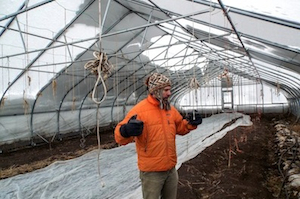
Karl Sutton is part of a food cooperative in Montana where he grows spinach. He understands the co-op model and thinks it can work for his health insurance company.
Funded almost entirely by federal government loans this year, 听initial enrollment numbers look pretty good for a lot of co-ops, but that鈥檚听not necessarily enough听to make them successful.
There are definitely people out there who are听stoked about being able to buy their health insurance through a co-op. Karl Sutton is one of those people.
Sutton lives in an incredibly scenic part of Montana just south of Glacier National Park. Tall dark forests, and taller mountains are blanketed white in still bitterly cold early March.
But in Sutton鈥檚 mobile greenhouse, it鈥檚 warm and there鈥檚 spinach growing. He sells vegetables to nearby markets in Missoula and Kalispell, but not these greens: 鈥淭his is just spinach we over wintered.听We鈥檙e just eating it ourselves.鈥�
Sutton understands co-ops because he works in one: 听a 10-year-old growers鈥� co-op, with more than $1 million a year in revenue. It鈥檚 run by and for its members, and Sutton wants that model for his health insurance company, too.
鈥淲hen you buy into a co-op, that entitles you to one vote in the decision making, and I think it鈥檚 the one business model that actually aligns with our democracy,鈥� he says.
Sutton was eager to sign up with the new听. He thinks if members own the company, they won鈥檛 overuse health care, to save everyone money. He knows it鈥檚 an unproven start-up.
鈥淭here鈥檚 a degree of concern, but, well, we might as well try, because if we don鈥檛 have the membership then the health care co-op isn鈥檛 going to succeed,鈥� he says. 鈥淲e have to start somewhere, and I鈥檓 willing to take that risk鈥�
A couple of hundred miles and several mountain ranges away John Morrison has a comfortable law office on Last Chance Gulch, a street in the heart of Montana鈥檚 capital city, Helena. Morrison was the听first president of the听.
鈥淚n some states,听co-ops are dominating the marketplace, with 80 percent of the enrollees going to the co-op,鈥� he says.
That鈥檚 in Maine. Morrison says most co-ops are very happy with their enrollment numbers. Their rates are often the lowest available through an exchange.
鈥淭he co-op states have 8.4 percent lower premiums on average than the non-co-op states, across the marketplace,鈥� says Morrison. 鈥淪o co-ops are creating that competition. They鈥檙e keeping rates down in the states they鈥檙e operating in.鈥�
But not everybody thinks that lower prices in some states are directly tied to whether a state has a co-op option. Bob Laszewski is an insurance industry consultant, and he says low prices in a company鈥檚 first year don鈥檛 mean much.
鈥淲e haven鈥檛 seen any claims yet. Getting the premium in the health insurance business is the first part of the business. Having enough premium to pay the claims over time is the real test,鈥� he says.
The co-ops do have a financial cushion: federal start-up loans of about $100 million each. That gives them several years to re-adjust prices to cover all the health care their members will need.听听 It鈥檚 likely a听 lot of their customers are people insurance companies avoided in the past 鈥� people who either couldn鈥檛 afford insurance before the new health law subsidies, or were turned down because they were sick, says Laszewski.
鈥淭hese co-ops have to make it in this most problematic niche of all,鈥� says Laszewski.听 鈥淚n particular they鈥檙e not in the large employer market, which is the bread and butter for these guys. They鈥檙e not in the Medicare Advantage business, they鈥檙e not in the Medigap business, they鈥檙e not in the Medicare part D business. Those are the profitable businesses in the industry.鈥�
Jerry Dworak, head of Montana鈥檚 co-op, says there is enough margin in the new exchange market for the company to survive. He says he鈥檚 especially happy with the number of customers he鈥檚 been able to get in spite of healthcare.gov simply not working for the first two months it was open.
鈥淣ever in my wildest imagination, with the political capital that was involved in this thing did I think you鈥檇 hit healthcare.gov and it was blank! I never thought that was going to happen!鈥� he laments.
But Montana鈥檚 co-op has still managed to win about 40 percent of the new exchange market. Co-ops have 50 percent of the new market in Nebraska and Iowa, and 60 percent in Kentucky.听Dworak attributes Montana鈥檚 successes, so far, to tirelessly beating the bushes for customers.
鈥淚t鈥檚 grassroots,鈥� he says.听 鈥淥ne thing about Montana, what really plays is what one Montanan says to another one in a coffee shop.鈥�
Dworak is so optimistic, he鈥檚 planning to expand into Idaho next year. He knows it鈥檚 going to be tough to carve out a successful niche in a brand new and volatile market.
This story is part of a reporting partnership between听听and Kaiser Health News.